Latest from the Chronicler’s Archive
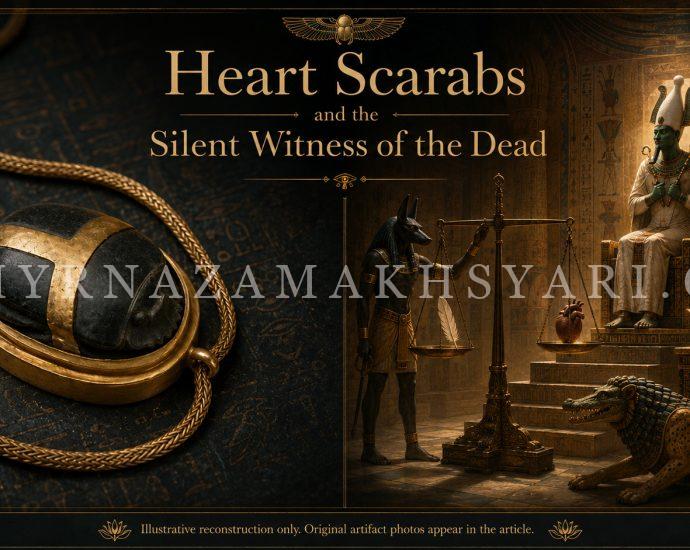
Heart Scarabs and the Silent Witness of the Dead
The Heart Scarab of Hatnefer may appear as a small carved beetle suspended from gold, but in ancient Egyptian belief it belonged to one of the most serious moments after death: the weighing of the heart. Unlike the organs protected in canopic jars, the heart usually remained inside the body because it carried memory, thought, and moral truth. Engraved with a spell from the Book of the Dead, the heart scarab asked the heart not to testify against its owner before Osiris. More than an amulet, it was a quiet protection against the fear that the heart itself might become the final witness.Unearth the Story
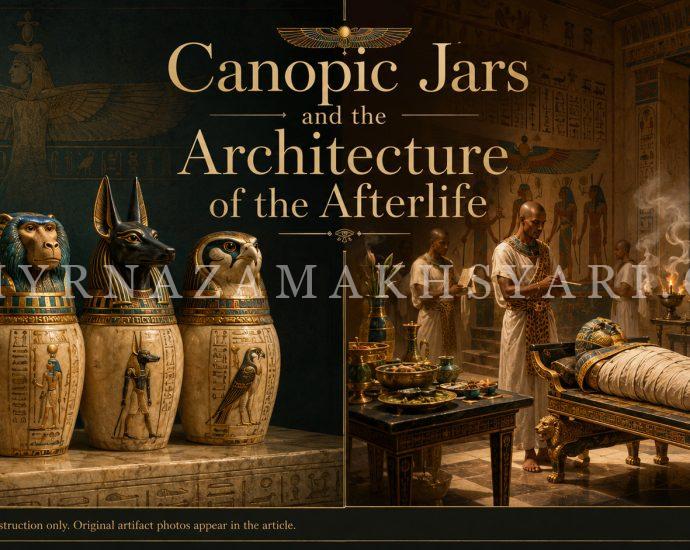
Canopic Jars and the Architecture of the Afterlife
Behind museum glass, canopic jars may appear as four quiet vessels from ancient Egypt. Yet these jars once guarded the inner body of the dead, protecting the liver, lungs, stomach, and intestines under the care of the Four Sons of Horus. More than funerary containers, they formed part of a sacred architecture of the afterlife—one built from mummification, divine guardianship, ritual texts, memory, and the ancient hope that no part of the person should be abandoned on the road to eternity.Unearth the Story
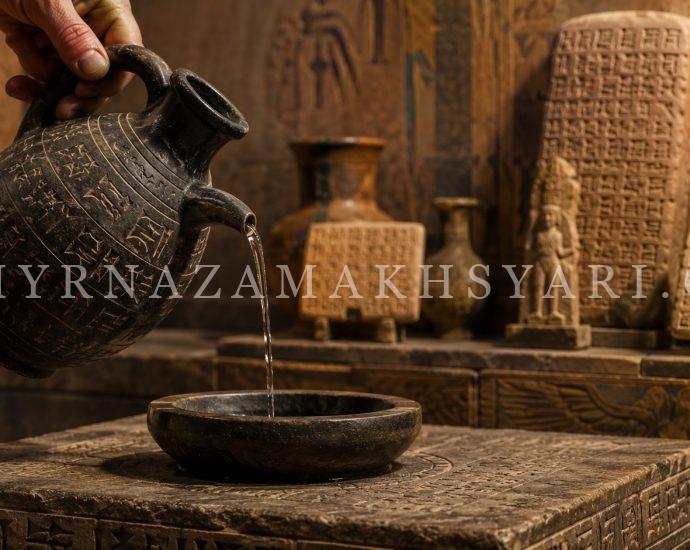
Libation Vessels, Ritual Bowls, and the Sacred Logic of Pouring
Before pouring became ordinary, it was sacred. This museum essay explores how ancient civilizations used libation vessels, ritual bowls, offering tables, and incantation bowls to transform liquid into offering, purification, nourishment, protection, and meaning.Unearth the Story
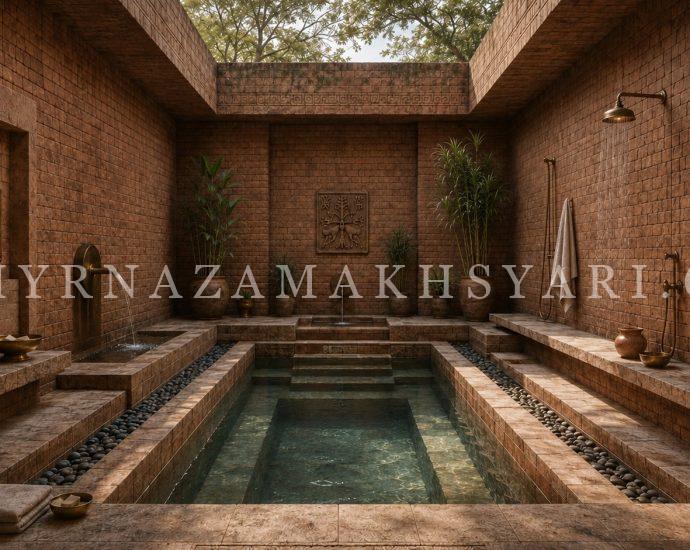
Water, Brick, and the Ordered Body: An Indus Valley Bathing Courtyard Design Synthesis
There are bathrooms designed to impress the eye, and there are bathing spaces designed to organize the body. The first often depends on shine, spectacle, and surface. The second depends on sequence, material, water, silence, and the slow intelligence of use. An IndusUnearth the Story

Fire, Grain, and Domestic Civilization in Contemporary Interior Design
A Neo-Classical Babylonian Fusion Kitchen Case Study A Kitchen Where Civilization Becomes Daily Ritual A kitchen is one of the oldest ideas in domestic life. Long before it became a room of cabinetry, marble countertops, built-in ovens, polished fixtures, and carefully planned storage,Unearth the Story
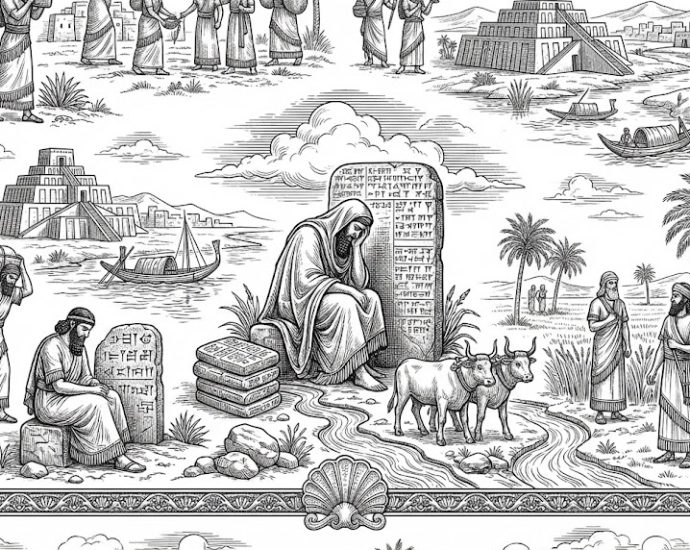
When the Weight Has No Name
There are burdens the body learns to carry before the mind knows how to speak of them. They embody meaning without language. They arrive without memory of origin. They do not announce themselves as grief, nor present themselves as fear. They simply settle—quietly—somewhereUnearth the Story
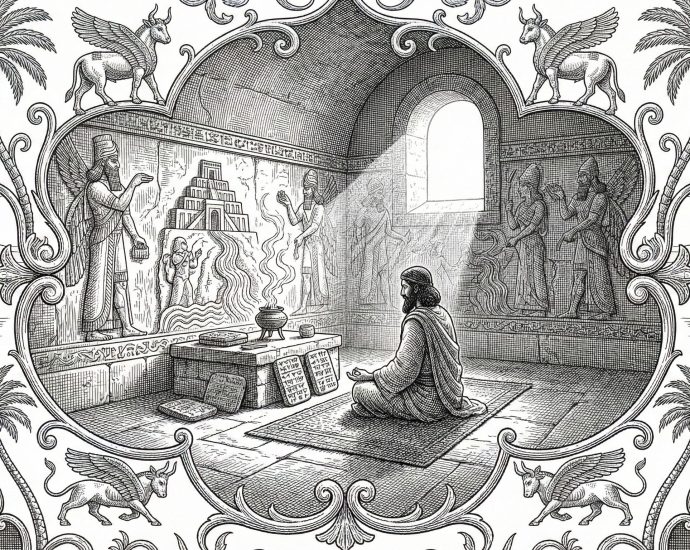
Before the Breath Asks Anything
Before meaning asks anything of you, there is breath. Before strength, there is staying. This quiet chamber holds no answers, only permission—to pause, to soften, to remain. Weariness is not failure here, nor is endurance weakness. For a moment, you are allowed to exist without purpose, without urgency, without repair, while the soul remembers how to breathe.Unearth the Story
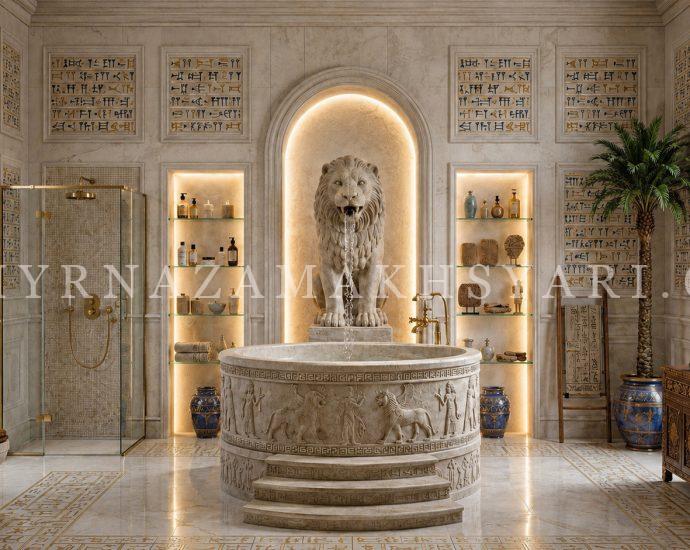
Water, Order, and the Sacred Body: A Neo-Babylonian Bathroom Design Synthesis
An in-depth exploration of Neo-Babylonian Bathroom Design through a contemporary lustral chamber inspired by ancient Mesopotamian ritual and symbolism. This article examines how water, purification rites, circular geometry, and the absence of mirrors are translated into a modern bathing space that prioritizes calm, introspection, and continuity—transforming the bathroom into a meditative environment rooted in ancient cosmology and disciplined architectural order.Unearth the Story
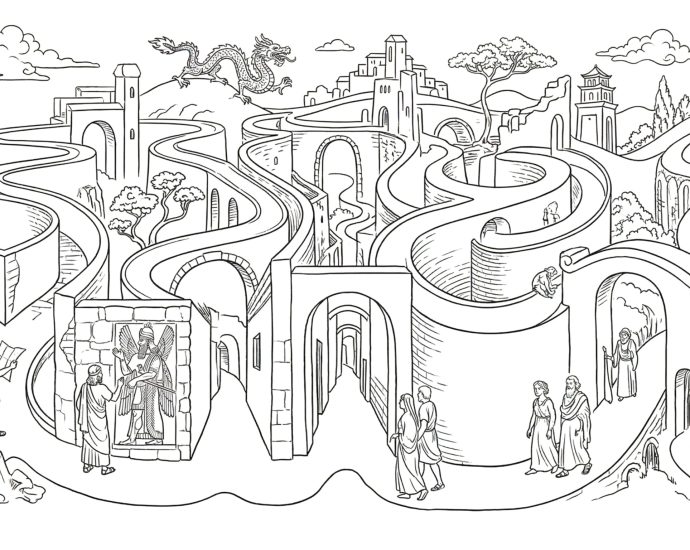
AP-002 — Streets That Do Not Lead
“No street in the city leads where it first appears to go. Arrival is never direct.The city ensures that nothing arrives unchanged.” Recovered apocryphal text based on architectural patterns observed in early Mesopotamian urban settlements. Catalog Entry Catalog Entry: AP-002Attributed Region: Southern MesopotamiaPeriod:Unearth the Story
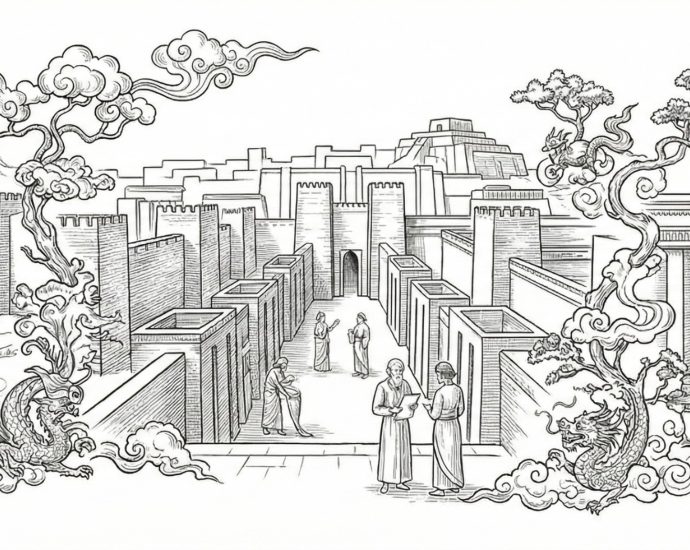
AP-001 —The Silence That Founded Ur
Before the city had walls, it had a silence older than stone. Some heard it—not as a voice, but as a pressure beneath the breath. They were not chosen, only unable to forget. When the first crown was raised, the silence was asked to leave. It did not. It learned where to remain, and waited.Unearth the Story