How an ancient Egyptian amulet protected the heart, the memory, and the soul from the final judgment of the afterlife.
A Beetle Resting Over the Heart
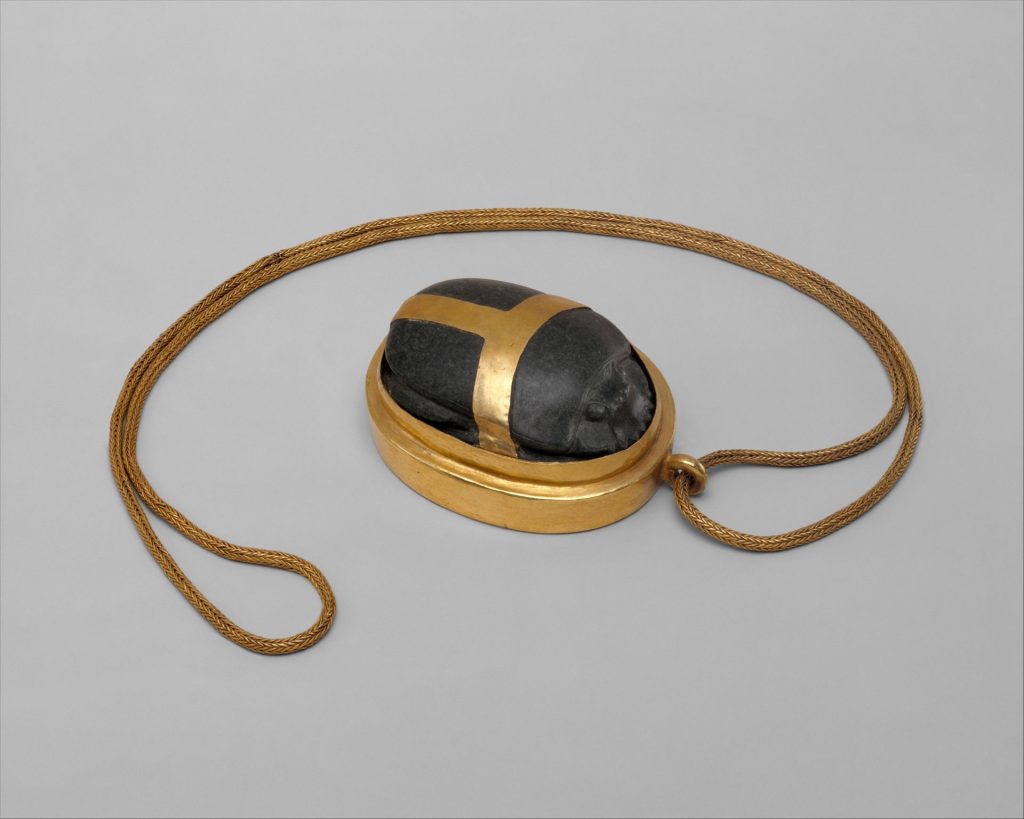
At first glance, the Heart Scarab of Hatnefer may look like a precious ornament from a distant tomb: a dark stone beetle, carefully carved, suspended from a delicate gold chain. Its surface is quiet. Its scale is intimate. It is small enough to rest in the palm of a hand, yet within ancient Egyptian belief it belonged to one of the most serious moments a person could ever face—not in life, but after death.
It was made for the heart.
Not the heart as a modern symbol of romance or emotion alone, but the heart as the ancient Egyptians understood it: the center of life, thought, memory, character, and moral truth. A heart scarab was not simply worn for beauty. It was a funerary amulet, placed with the dead to help protect them during the final judgment in the afterlife.
The idea behind it is both strange and deeply human. The ancient Egyptians believed that after death, the heart could be weighed before Osiris, lord of the dead. It could reveal whether a person had lived in harmony with Maat, the principle of truth, justice, balance, and cosmic order. If the heart testified against its owner, the soul’s hope of eternal life could be lost.
This is why Hatnefer’s scarab matters so much. It is not only a beautiful object. It is a prayer in the shape of a beetle. It is a small, silent protection against the possibility that one’s own heart might speak the truth too loudly at the gates of eternity.
What Was a Heart Scarab?
A heart scarab was a special type of ancient Egyptian funerary amulet, usually shaped like a scarab beetle and associated with the heart of the deceased. Scarabs were among the most familiar and powerful amulets in ancient Egypt, but heart scarabs had a particular role. They were connected not only with rebirth and protection, but also with the moral judgment of the dead.
The Heart Scarab of Hatnefer, now in The Metropolitan Museum of Art, is an especially fine example. It dates to the early Eighteenth Dynasty of the New Kingdom, around 1492–1473 B.C. It was found in the tomb of Hatnefer and Ramose at Thebes, in the area of Sheikh Abd el-Qurna. The scarab itself is made of serpentinite, while its chain is made of gold. The object is elegant, carefully worked, and intimate in scale, but its purpose reaches far beyond ornament.
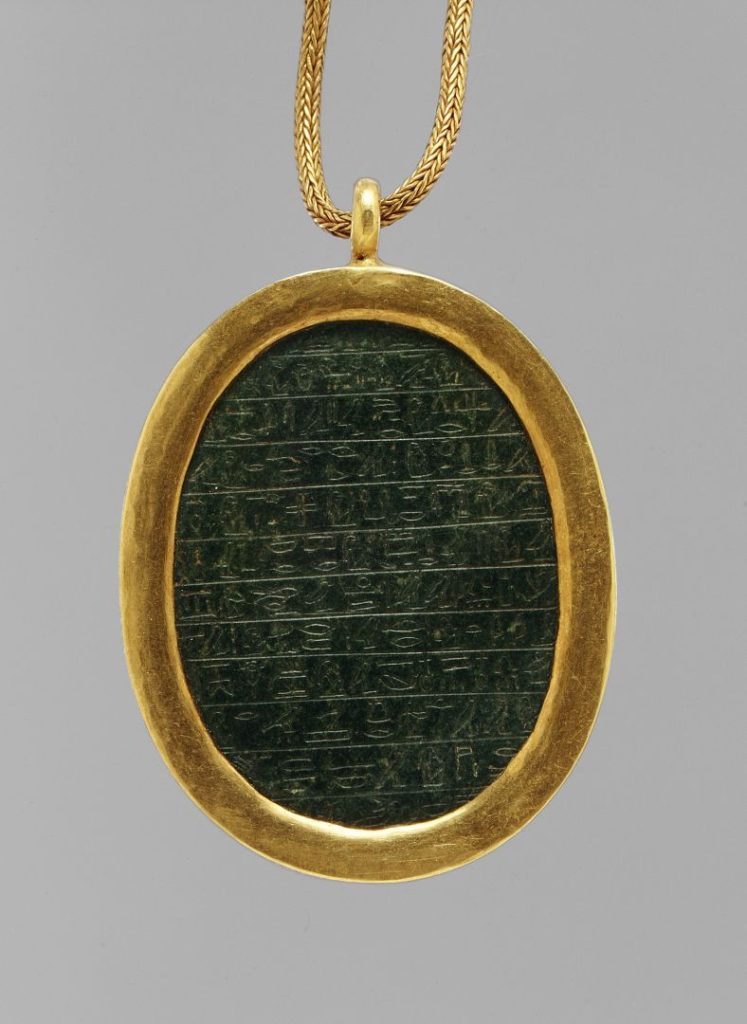
The underside of Hatnefer’s scarab is engraved with a version of Book of the Dead Chapter 30A. This is the crucial detail. The inscription is not merely decorative. It belongs to a funerary spell in which the deceased addresses her own heart and asks it not to bear witness against her during the final judgment.
A heart scarab, then, was not a simple jewel. It was an object of ritual speech. It carried words meant to act in the afterlife. It joined material, image, and text into a single protective device. The beetle form invoked renewal; the stone gave permanence; the gold chain gave honor; the engraved spell gave the deceased a voice at the moment when speech, memory, and truth mattered most.
This makes the heart scarab one of the most psychologically powerful objects in Egyptian funerary culture. It does not only ask the gods for protection. It speaks to the heart itself.
The Hands Behind the Amulet: Craft, Inscription, and Personalization
A heart scarab may appear in a museum as a finished object, complete and silent behind glass. Yet before it entered the tomb, it passed through human hands. Someone selected the stone. Someone shaped the beetle’s back, legs, head, and base. Someone worked the gold chain or the setting. Someone cut the hieroglyphs into the underside. Someone, perhaps the owner or the owner’s family, acquired it as part of a funerary preparation shaped by both faith and status.
We should be careful not to imagine Egyptian heart scarabs in exactly the same way as ritual objects from other cultures whose makers are remembered by name. In many cases, the individual maker of an Egyptian amulet is unknown. We do not usually know the personal name of the stone carver, jeweler, goldsmith, or scribe who worked on a particular heart scarab. The object survives; the hands that made it often disappear into anonymity.
But anonymity does not mean absence of skill.
A heart scarab like Hatnefer’s required several kinds of knowledge. The artisan had to understand the form of the scarab beetle and how to render it in stone. The person responsible for the chain had to work gold into a fine and durable structure. The person who carved the inscription had to know—or copy accurately—the funerary text that made the amulet ritually meaningful. The maker did not simply produce a decorative insect. The object had to function as an amulet, as a text-bearing surface, and as a piece of funerary equipment.
This combination of craft and inscription is important. In ancient Egypt, the power of an amulet could come from many things at once: its shape, material, color, inscription, placement, and ritual use. A scarab form could evoke renewal. A hard dark stone could suggest endurance. Gold could suggest divine radiance and imperishability. A spell could call upon a sacred tradition of words. Placement over the heart could connect the object directly to the organ it was meant to protect.
Hatnefer’s scarab also reveals something very interesting about personalization. The inscription includes her name, but evidence suggests that her name was inserted over an erased text. This means the scarab may not have been made specifically for Hatnefer from the beginning. It may have been produced earlier, perhaps as a high-quality funerary object that could later be adapted for its final owner.
This possibility opens a small window into the funerary economy of ancient Egypt. Some heart scarabs may have been custom-made for a particular person. Others may have been made in advance, with space left for a name or with a name later altered. A family could acquire an object, personalize it through inscription, and incorporate it into the burial. The sacred object was not less meaningful because it passed through a practical system of production and purchase. In Egyptian ritual logic, personalization—especially the insertion of the correct name—helped bind the object to the person who needed its protection.
This is one reason the name mattered so deeply. In ancient Egypt, a name was not a casual label. It was part of the person’s continued existence. To write the name on a funerary object was to connect that object to the individual soul, memory, and identity of the deceased. Without the name, the protection remained general. With the name, it could become personal.
So the heart scarab was made by craft, but completed by identity. It became truly Hatnefer’s not only because it was placed with her body, but because the words beneath it named her and spoke on behalf of her heart.
Why the Heart Could Not Be Removed
The heart scarab becomes even more meaningful when placed beside the canopic jars of ancient Egypt.
During mummification, certain organs were removed from the body: the liver, lungs, stomach, and intestines. These organs could be treated, wrapped, and protected in canopic jars under the guardianship of the Four Sons of Horus. They were not discarded; they were preserved because the deceased was expected to remain whole in the afterlife.
The heart was different.
In most Egyptian mummification practice, the heart was left inside the body. This was not simply because the embalmers forgot it or considered it unimportant. It remained because it was too important to remove. The heart was regarded as the center of the person’s inner life. It was the place of thought, memory, intention, conscience, and moral identity.
To modern readers, this may feel unusual. Today, many cultures associate thinking with the brain. But for the ancient Egyptians, the heart carried the truth of a person. It remembered what had been done. It knew what had been hidden. It held not only life, but accountability.
This is why the heart had to remain. The other organs could be separated and guarded in vessels. The heart had to stay with the body because it would be needed later. In the judgment after death, the heart was not merely an organ. It was evidence.
Here we begin to see the deep difference between canopic jars and heart scarabs. Canopic jars protected the organs that had been removed. Heart scarabs protected the organ that remained. The jars guarded physical wholeness. The scarab guarded moral destiny.
A heart scarab was placed near the heart because the heart itself was dangerous. Not dangerous like a monster, but dangerous because it knew. It could tell the truth. And in the ancient Egyptian imagination, truth was not a small thing. Truth could decide eternity.
The Spell Beneath the Scarab: Funerary Texts and the Language of the Dead
To understand why a scarab would carry a spell, we first need to understand something essential about ancient Egyptian religious writing.
Ancient Egypt did not have one single “holy book” in the modern sense. Its religious imagination was preserved across a long and changing tradition of texts, rituals, images, hymns, prayers, and spells. These writings were not gathered into one fixed scripture that every person used in exactly the same way. Instead, they developed across centuries, appearing on pyramid walls, coffins, papyri, mummy wrappings, amulets, tomb walls, and funerary objects.
In other words, Egyptian funerary writing was not only read. It was placed.
It was placed around the dead, beneath the dead, above the dead, beside the dead, and sometimes directly upon the objects that touched the body. A spell could be written on a coffin because the coffin was not merely a box. It could be written on papyrus because the papyrus became a guide. It could be written on an amulet because the amulet was meant to act. And it could be carved beneath a heart scarab because that scarab rested close to the heart, the very organ whose testimony mattered in the afterlife.
The earliest major body of Egyptian funerary texts is known today as the Pyramid Texts. These were inscribed in royal pyramids during the Old Kingdom and were originally connected with the afterlife hopes of kings. They helped the dead ruler ascend, join the gods, and continue in a transformed divine existence. Later, during the Middle Kingdom, many afterlife spells appeared in a broader form known as the Coffin Texts. These texts were written on coffins and funerary equipment, and they show how ideas of the afterlife gradually extended beyond the royal sphere into elite and non-royal contexts.
By the New Kingdom, another major tradition became especially important: the collection now commonly called the Book of the Dead. Its ancient Egyptian title is often translated as the Book of Coming Forth by Day. This title matters. It reminds us that the text was not imagined as a sinister book of curses. It was a book of emergence, passage, and survival. It offered the deceased a way to move through the dangers of the afterlife, speak the right words, preserve identity, receive breath and offerings, and appear justified before the divine court.
The modern title Book of the Dead can sound dark to modern ears, almost as if it belonged to forbidden magic or horror fiction. But in its ancient setting, it was closer to a sacred manual for the next world. It did not belong to fear alone. It belonged to preparation. The dead needed knowledge, names, formulas, protections, and ritual speech. The afterlife was not imagined as a place one entered empty-handed. It was a difficult country, and words could become provisions for the journey.
This is why ancient Egyptian funerary texts often feel both practical and sacred. They are prayers, but they are also instructions. They are poetry, but they are also equipment. They ask gods for help, but they also give the deceased phrases to speak, dangers to recognize, gates to pass, and transformations to claim.
In this religious world, words were not passive.
A written name could help preserve a person’s existence. A painted offering scene could help provide food and drink. A spell on a papyrus could guide the soul. A formula on an amulet could protect the body. Writing did not merely describe belief; it participated in belief. The written word was part of the architecture of survival.
The inscription beneath a heart scarab belongs to this same sacred technology of words.
The base of Hatnefer’s heart scarab is engraved with a version of Book of the Dead Chapter 30A. This is not an accidental decoration. It is the core of the object’s power. The spell is addressed to the heart itself, asking it not to rise against the deceased as a hostile witness during judgment.
That idea is extraordinary.
The spell does not begin by accusing an enemy. It does not ask for protection against a demon, a serpent, or a monster outside the body. Instead, it turns inward. It speaks to the heart as if the heart were a living companion, a witness, and a possible danger. The deceased asks the heart not to oppose her, not to testify against her, not to create a case against her before the divine court.
This is why the heart scarab is so psychologically powerful. It is not only an amulet against external danger. It is an amulet against inner testimony.
Chapter 30A is concerned with the heart as the keeper of truth. In ancient Egyptian thought, the heart was not merely an anatomical organ. It carried memory, intention, intelligence, and moral identity. It knew the actions of the person. It knew what had been done and perhaps what had been hidden. During the final judgment, this knowledge could become dangerous if the heart spoke against its owner.
The spell therefore asks the heart to remain aligned with the deceased. It pleads for harmony between the person and the truth stored within them. In simple terms, it says: do not become my accuser when I stand before the gods.
There is also a deep philosophical tension here. The spell does not erase the importance of morality. It does not say that judgment is meaningless or that wrongdoing can simply be hidden. Instead, it reveals the anxiety of a religious world in which memory, truth, and survival were tightly bound together. The Egyptians understood that the afterlife required more than a preserved body. It required a self that could survive being known.
The scarab form adds another layer. Scarabs were associated with becoming, renewal, and the daily rebirth of the sun. To place such a form over the heart was to bring the hope of renewal close to the organ of judgment. The object joined two ideas that might seem opposite: the fear of being judged and the hope of being reborn.
This is why the spell was carved beneath the scarab, on the hidden side.
The visible side showed the beetle, a symbol of becoming. The underside carried the words, the plea, the legal and spiritual speech addressed to the heart. Together, they formed a complete funerary object: image above, text below; rebirth above, judgment beneath; scarab form outside, heart anxiety within.
Hatnefer’s scarab therefore works on several levels at once. It is jewelry, but not merely jewelry. It is sculpture, but not merely sculpture. It is an amulet, a text-bearing object, a ritual device, and a theological statement about the heart’s role in the afterlife.
The spell beneath the scarab tells us that the Egyptians did not imagine death as silence. The dead still needed words. They needed words to speak to gods, to cross thresholds, to answer accusations, and, in this case, to address the most intimate witness of all: their own heart.
The Weighing of the Heart: Osiris, Maat, and the Fear of the Second Death
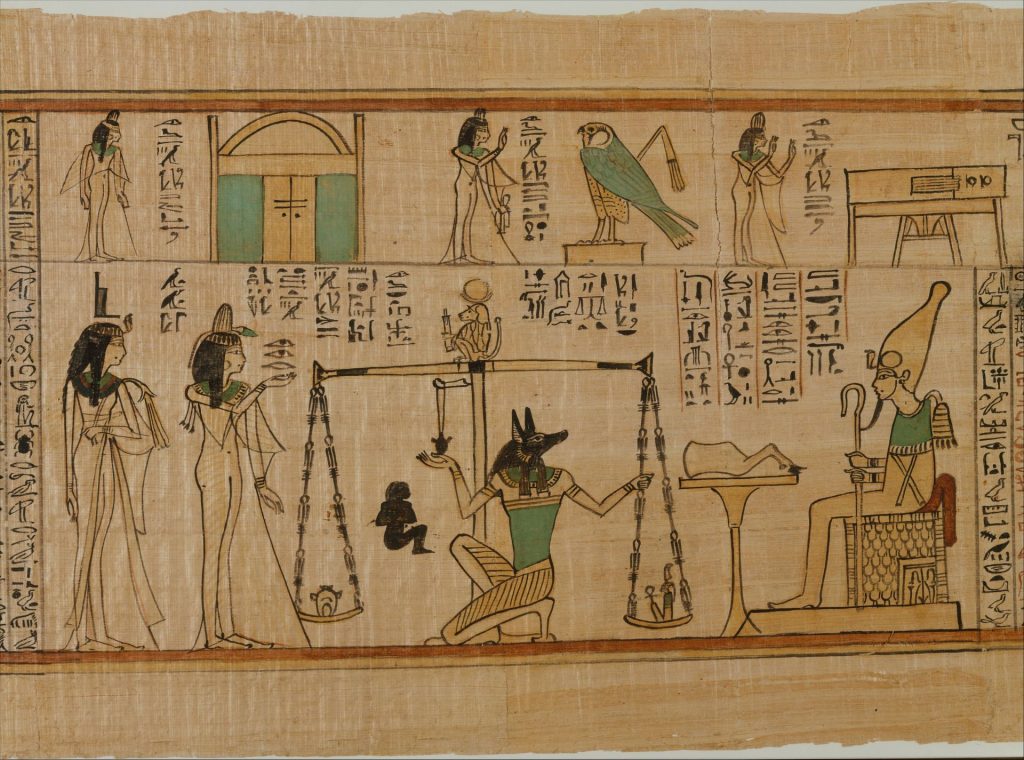
The heart scarab cannot be understood apart from the ancient Egyptian judgment scene known as the Weighing of the Heart.
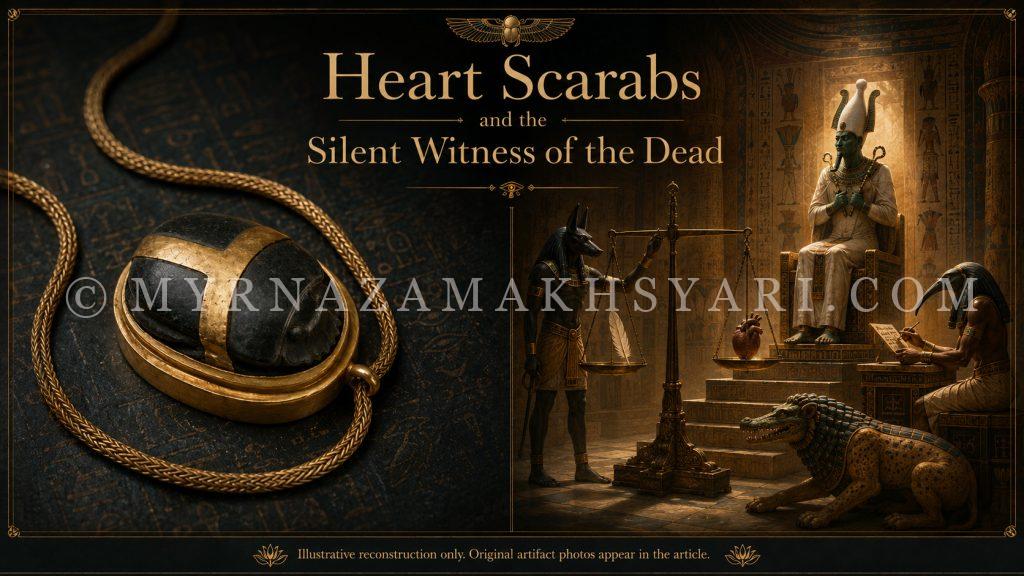
In this scene, the deceased stands before the divine court of the afterlife. Osiris, lord of the dead, presides over the judgment. Anubis, closely associated with embalming and the care of the dead, tends the scales. Thoth, the divine scribe and lord of writing, records the result. Nearby waits Ammit, a fearsome composite creature often described with features of crocodile, lion, and hippopotamus.
At the center of the scene is the scale.
On one side is the heart of the deceased. On the other is Maat, often represented by a feather or by the goddess herself. Maat is not easy to translate with one English word. It means truth, order, justice, balance, and the right arrangement of the cosmos. To live according to Maat was to live in harmony with divine and social order. To violate Maat was to disturb the balance on which life and eternity depended.
If the heart balanced with Maat, the deceased could be declared justified, sometimes described as “true of voice.” This meant that the person had passed the judgment and could continue into blessed existence with Osiris. But if the heart failed, the result was terrifying. Ammit would consume it, and the person would be deprived of continued existence.
This is the fear often described as the “second death.” The first death was the end of earthly life. The second death was far worse: the loss of eternal life, the collapse of identity, the failure to continue beyond judgment. For the ancient Egyptians, this was not merely punishment. It was non-existence.
Now the heart scarab becomes clear.
It was not created because Egyptians thought death was simple. It was created because they believed death was a passage filled with danger, and the most dangerous moment was not necessarily the crossing of a dark river or the meeting with demons. It was the moment when the heart would be tested. It was the moment when the self could no longer hide from itself.
The heart scarab stood between the deceased and that judgment. Its spell asked the heart not to accuse, not to oppose, not to become a witness against its owner. It was a small object placed near the body, but it carried a profound hope: that memory, morality, and truth might not destroy the one who carried them.
Who Could Afford a Heart Scarab? Protection, Status, and Simpler Amulets
The Heart Scarab of Hatnefer is beautiful, but it should not be mistaken for an object that every Egyptian would have owned in the same form.
Ancient Egyptian funerary practice was shaped by belief, but also by access. The desire for protection in the afterlife was widespread, yet the material form of that protection varied greatly. Wealth, family status, occupation, region, period, and burial circumstances all influenced what a person could carry into the tomb. Some people were buried with elaborate coffins, papyri, jewelry, amulets, canopic equipment, and carefully prepared funerary texts. Others received far simpler burials.
A heart scarab with a finely carved stone body, a gold chain, and a careful inscription belonged to the more elaborate end of that spectrum. Hatnefer’s scarab is not an ordinary trinket. It represents a high-quality form of funerary protection, one that required skilled labor and valuable materials. The beauty of the object is part of its story, but so is the social world that made such beauty possible.
At the same time, we should not imagine ancient Egyptian protection as belonging only to the wealthy. Amulets were extremely important across Egyptian society, and many were likely inexpensive enough to be available to a broad range of people. What differed was not always the presence of belief, but the scale, material, refinement, and textual completeness of the object.
In the case of heart protection, there were several possible levels.
At the most elaborate level, a person might have a large heart scarab made from fine stone, carefully inscribed with a heart spell, and attached to a gold or precious-metal setting. Such an object could be placed on the mummy near the chest, close to the heart it was meant to protect. It combined the scarab’s symbolism of rebirth with the legal and moral function of the spell.
A simpler heart scarab might have been made from less costly materials, with less refined carving or a more routine inscription. Some heart scarabs appear to have been produced before a specific owner was known. A blank space could be left for the name, or a name could be added later. This does not make the object meaningless. It shows that funerary protection could be prepared, purchased, adapted, and personalized.
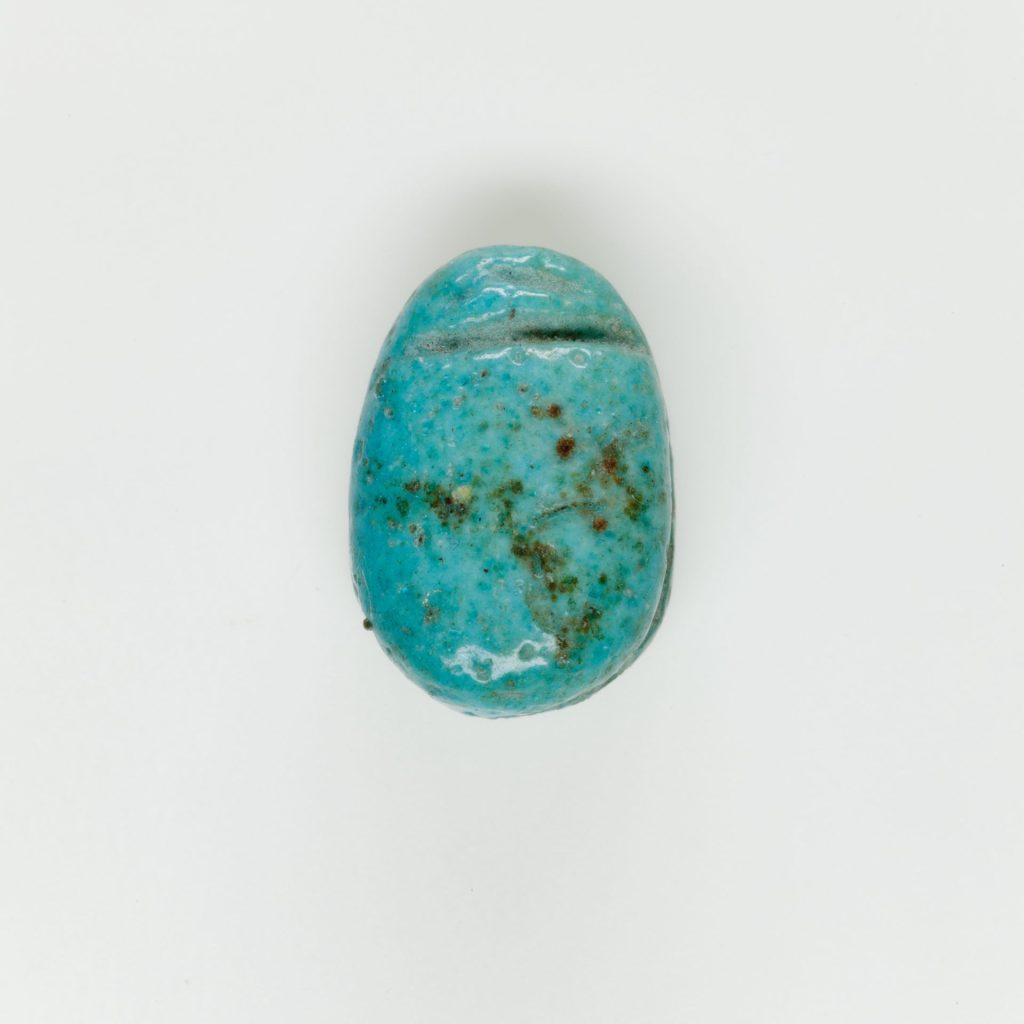
There were also scarab amulets that were not heart scarabs. This distinction matters for readers new to the subject. Every heart scarab is a scarab, but not every scarab is a heart scarab. Many scarabs functioned as general amulets of protection, rebirth, identity, or even administrative sealing. They could be worn in life, used as seals, placed in burials, or carried as symbols of renewal. A heart scarab, however, had a more specific funerary role because it was connected with the heart and its judgment.
Beyond scarabs, there were also heart-shaped amulets and other small protective objects. Some may have been made from glass, stone, jasper, agate, or other materials. These objects could still speak the language of heart protection, even if they did not carry the full scale and textual richness of a large elite heart scarab. In a simpler burial, a small amulet could become a concentrated form of hope.
There were textual alternatives as well. A person who could not afford a long papyrus of funerary spells might still have access to shorter formulas on a coffin, mummy wrapping, amulet, or other object. In Egyptian ritual logic, the written word could act even when the object was modest. A brief formula, a name, a symbol, or a small amulet could participate in the same sacred economy of protection, though not with the same material grandeur as an elite burial.
This does not erase inequality. A simple amulet was not the same as a gold-linked heart scarab of high workmanship. A short formula was not the same as an illustrated papyrus. A modest grave was not the same as an elaborate tomb. Ancient Egyptian afterlife preparation was deeply shaped by social reality.
But the existence of humbler forms matters. It shows that the hope for protection did not belong only to those who could afford perfection. The wealthy might carry a finely carved scarab and an extended funerary text. Others might carry smaller amulets, simpler inscriptions, family prayers, or modest objects placed close to the body. The form changed, but the longing remained: that the heart would endure, the name would be remembered, and the person would not vanish before the judgment of eternity.
Modern Myth, Ancient Meaning
Modern fiction has often turned scarabs into creatures of terror.
In adventure and horror stories, scarabs may appear as black crawling beetles, symbols of tomb curses, or monstrous insects that devour the living. The image is dramatic and easy to remember. A dark beetle emerging from an ancient chamber can become a perfect cinematic sign of danger.
But this is not how ancient Egypt primarily understood the scarab.
For the Egyptians, the scarab beetle carried meanings of becoming, renewal, and rebirth. The Egyptian word for the beetle was associated in sound with the idea of “coming into being.” The beetle’s natural behavior also inspired religious imagination. Because dung beetles roll balls across the ground, the Egyptians connected the scarab with the daily rebirth of the sun, imagining the morning sun as if it were being pushed into the sky. This association linked the scarab with Khepri, a form of the rising sun and the power of renewal.
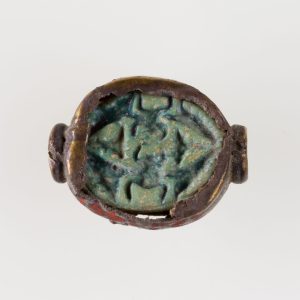
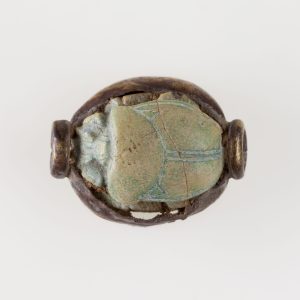
This does not mean the scarab was a light or playful symbol. Its meaning was serious. It belonged to transformation. It stood at the edge between darkness and dawn, death and return, burial and becoming. But it was not born from horror. It was born from a vision of life renewed each morning.
The heart scarab makes this meaning even deeper. It does not devour the dead. It helps the dead survive judgment. It is not a crawling curse. It is an amulet of protection. It does not represent death as spectacle, but death as moral passage.
This is why museum objects matter. They return ancient symbols to their own language. They remind us that what modern fantasy turns into fear may once have carried hope.
The Heart as Witness
The most haunting thing about the heart scarab is not its beetle shape, its gold chain, or even its connection to the afterlife. It is the idea that the heart could become a witness.
Ancient Egyptian religion imagined judgment in a way that was both cosmic and intimate. The deceased did not stand before Osiris with an empty record. The heart itself carried the record. It knew whether the person had upheld Maat. It knew the hidden weight of a life. It could not be bribed with a painted coffin or silenced by a beautiful tomb. This is why the heart scarab was necessary: not because the Egyptians believed magic could erase morality, but because they feared the terrible honesty of the heart.
There is something deeply human here. Every culture has its own way of imagining accountability. Some imagine books of deeds. Some imagine divine witnesses. Some imagine judgment by ancestors, angels, gods, or the moral order of the universe. In the Egyptian heart scarab, that accountability is carried within the body itself. The heart does not need to be summoned from outside. It is already there.
This makes the heart scarab one of the most intimate artifacts of the ancient Egyptian afterlife. It reveals that the Egyptians were not concerned only with preserving the body. They were concerned with preserving the self from its own fracture. A person had to remain whole physically, but also morally and spiritually. The body needed protection from decay. The name needed protection from forgetting. The heart needed protection from becoming an accuser.
In this sense, the heart scarab is not merely about death. It is about the relationship between a person and the truth of their own life.
The Amulet Against Forgetting
The Heart Scarab of Hatnefer is small, but it carries an enormous silence.
It came from a tomb, but it was made for a courtroom of the soul. It has the form of a beetle, but it speaks to the heart. It is carved from stone and joined to gold, yet its deepest material is fear: the fear of judgment, the fear of being known, the fear that the heart may remember what the mouth has forgotten.
And yet it is also an object of hope.
The scarab was a sign of becoming, of dawn, of the sun returning from darkness. Its spell did not deny the seriousness of judgment. It prepared for it. It gave the deceased words for the most dangerous moment of the afterlife. It asked the heart to remain a companion, not an enemy.
If canopic jars show us how the Egyptians protected the inner organs of the body, heart scarabs show us how they protected the inner truth of the person. One guarded what had been removed. The other guarded what had to remain.
Behind the glass of a museum, the heart scarab no longer rests upon Hatnefer’s body. The judgment it was made for belongs to a world of belief far older than our own. Yet the object still speaks, quietly and clearly, because its question has not vanished.
What does the heart remember?
For the ancient Egyptians, eternity did not begin with escape from the self. It began with the self being weighed. The heart scarab was placed there, over the silent chamber of the chest, so that when the dead stood before Osiris, the heart would not abandon them.
It was an amulet against forgetting.
A prayer against accusation.
A beetle of dawn resting over the place where truth lived.