Authentic artifacts, ancient objects, and material traces of lost civilizations—where history is preserved in stone, clay, papyrus, metal, and memory.
-
Heart Scarabs and the Silent Witness of the Dead
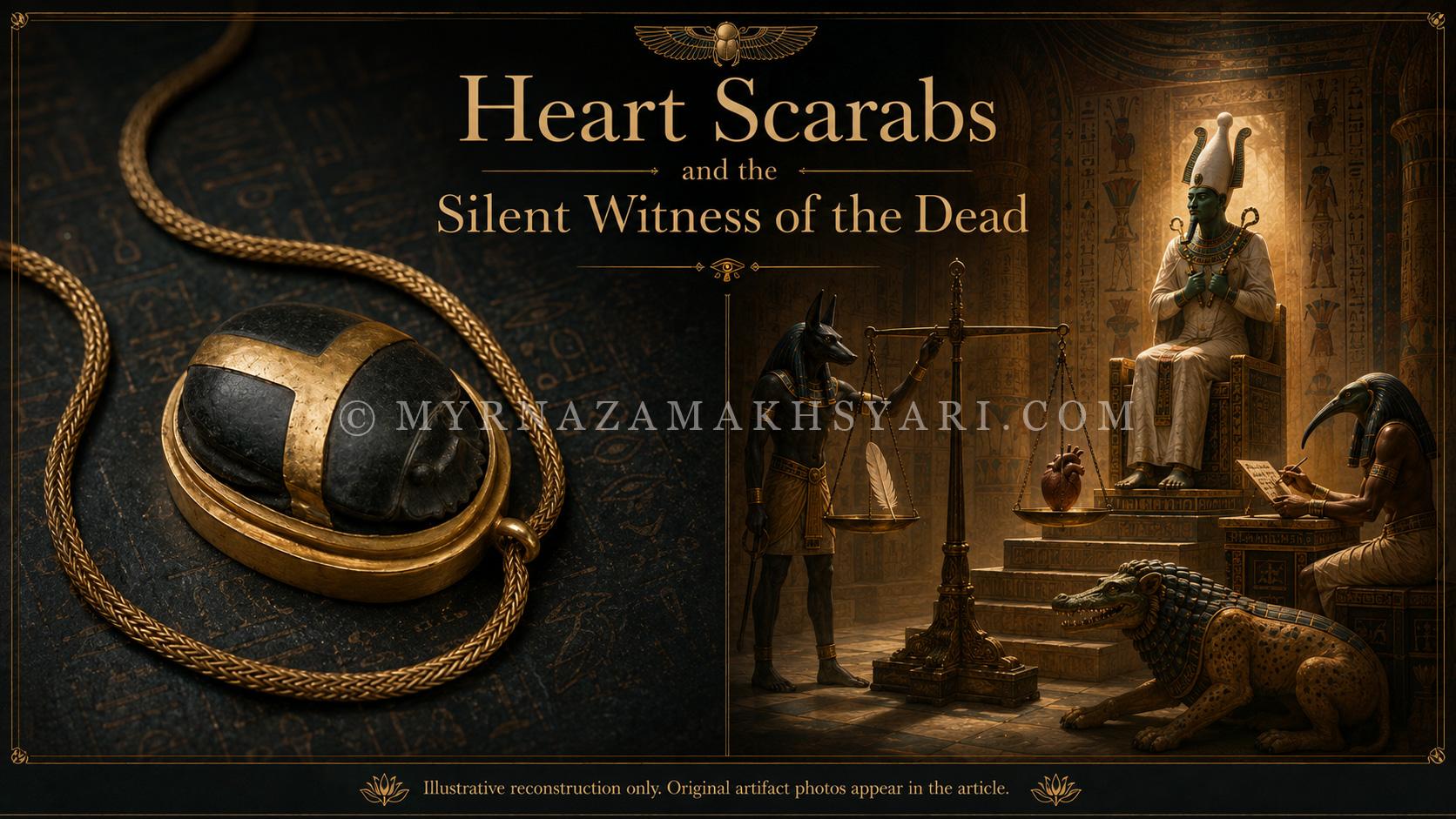
The Heart Scarab of Hatnefer may appear as a small carved beetle suspended from gold, but in ancient Egyptian belief it belonged to one of the most serious moments after death: the weighing of the heart. Unlike the organs protected in canopic jars, the heart usually remained inside the body because it carried memory, thought,…
-
Canopic Jars and the Architecture of the Afterlife
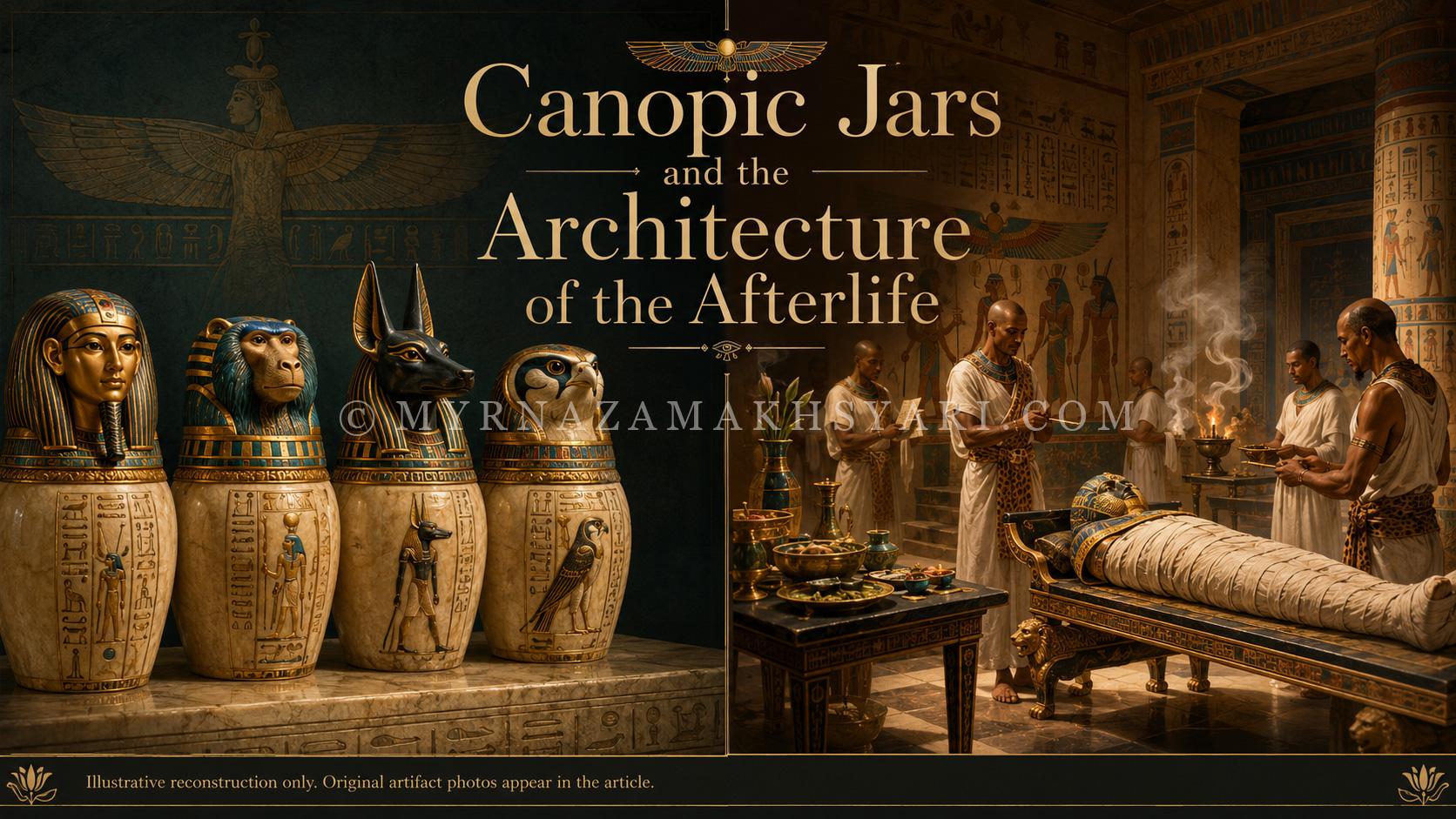
Behind museum glass, canopic jars may appear as four quiet vessels from ancient Egypt. Yet these jars once guarded the inner body of the dead, protecting the liver, lungs, stomach, and intestines under the care of the Four Sons of Horus. More than funerary containers, they formed part of a sacred architecture of the afterlife—one…
-
Libation Vessels, Ritual Bowls, and the Sacred Logic of Pouring
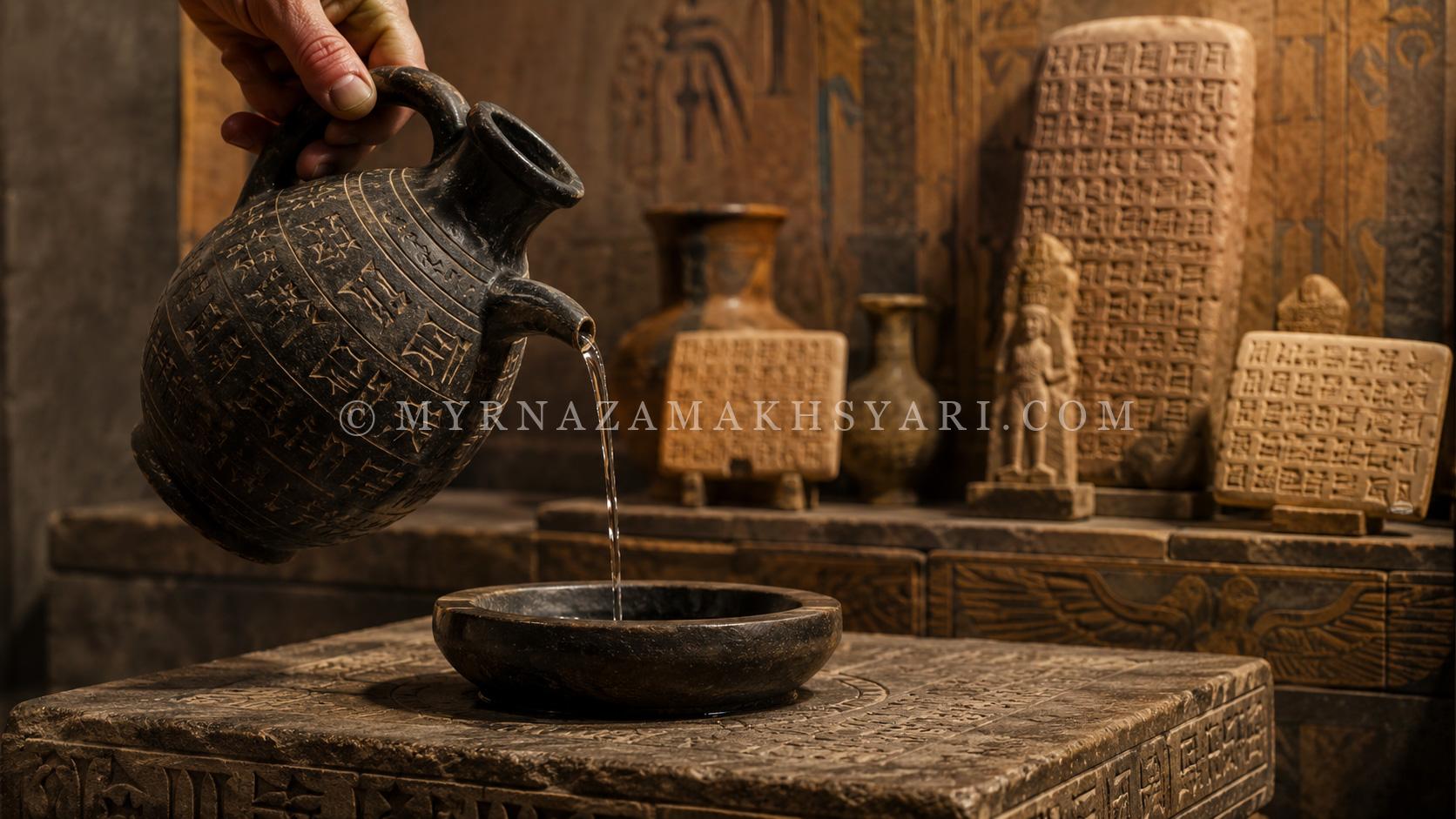
Before pouring became ordinary, it was sacred. This museum essay explores how ancient civilizations used libation vessels, ritual bowls, offering tables, and incantation bowls to transform liquid into offering, purification, nourishment, protection, and meaning.Unearth the Story
